Monday, August 8, 2022

On Odubel Herrerra, Deshaun Watson and Uniting the Art With the Artist


The Phillies swept the Pirates last weekend in a series I won’t pretend I watched. I’m a Phillies fan, don’t get me wrong - went bananas when they gifted Philadelphia its first major sports championship in forever back in 2008 and happy to see their current late July/early August hot streak - but your thirties tend to run your sports fandom through a Brita filter with only the most vital teams/players/events remaining when you pour yourself a glass. Between work, family, other commitments, and a slavish devotion to other clubs, something eventually gets relegated to the backburner, and for me, it’s usually been the team that plays 946 games a season and hasn’t sniffed the playoffs since Psy was screaming at butts.


Sports apps and social media make it easier than ever to keep tabs on a team, too, even when you're preoccupied with caring for a sick baby or eating a particularly delicious apple. It’s through the former that I was notified nightly of the Phils’ success in the Steel City, and through the latter that I was reminded of the existence of Odubel Herrerra, who knocked in a meaningless run in the final game.


This happens every so often when I watch or read about the Phils, but it’s not that I somehow forgot Odubel was a Phillie. Heck, if you asked me to name the first five 2022 Phillies that came to mind, he’d be in there with Bryce Harper, Zack Wheeler, and the guys who won’t let Canada tell them what they can put in their bodies. Odubel was here forever and been about the same player since the Phils snapped him up in the Rule 5 draft in 2014: a hitter with plenty of talent and not an ounce of plate discipline, an outfielder with great speed and zero tracking ability, like a fighter jet piloted by Malfunctioning Eddie the Car Salesman. I turned on a game over the July 4th weekend and watched him end it by flailing at three pitches in the dirt. It was frustratingly familiar; death, taxes, and Odubel failing to reach base.


No, I was “reminded” of Odubel Herrerra again because I was certain I would never see him play another inning in red pinstripes after May 28, 2019, the day word got out that he’d been arrested for allegedly assaulting his girlfriend Melany Martinez-Angulo at a hotel in Atlantic City. The 20-year old girl “had visible signs of injury to her arms and neck” when police found her, and though charges against Herrerra were eventually dropped - a development that wasn’t all that surprising given the regularity with which domestic violence cases don’t receive a verdict (and the myriad reasons why) - the Phillies and Major League Baseball tried to memory hole him for a while. They suspended him for the rest of the season.  They struck him from the All Star Game ballot. They took his picture off the banners hanging in the rafters of Citizens Bank Park.


Considering both the team’s and the league’s respective track records on handling players charged with DV in the past, it was a welcome, if not unexpected change of pace. The cynical calculus that comes into play whenever a professional athlete gets charged with a crime is common knowledge by now: is the player good enough to weather the storm? Is it worthwhile to keep this person around, absorb the bad press and the outrage, and bet on the number of torches and pitchforks dwindling as the incident becomes a speck in the rear-view mirror?

In Herrerra’s case, MLB and the Players Association had agreed on a shiny new domestic violence policy in 2015, and the league was happy to employ it against a player who was, in the grand scheme of things, unessential. The league wasn’t bringing the hammer down on Mike Trout or Mookie Betts; they were bringing it down on a player whose hitting had declined for four straight years and whose inconsistency and disappointing play had made him a lightning rod for criticism. Fans already disliked Odubel for his on-field play; now, they could dislike him on moral grounds, too.


But the Phillies never cut Herrera. Whether that was because they weren’t allowed to until the league concluded its own investigation or because it would have cost them millions of dollars wasn’t totally clear, Instead, they sent him to the minor leagues before the 2020 season. Then, a certain once-in-a-century pandemic happened, turning the 2020 baseball season into a strange three-month exercise in managed expectations, one which didn't involve Herrerra playing major league ball.

Then the 2021 season appeared on the horizon, and hey that’s weird, Odubel Herrerra got invited to Phillies spring training, and that’s odd, they sent him to the minors again instead of trading or releasing him, and what a coincidence, the team happens to have a dearth of playable outfielders, and wouldn’t you know it, the team called Herrerra up to the big leagues again on April 26, 2021, less than two years after he left the Golden Nugget casino in handcuffs, less than two years after team’s then-manager called the allegations  “deeply disturbing.” The Phillies had the eventual National League MVP and the Cy Young runner-up on their team and still found it necessary to overlook Odubel’s past and put him in the lineup to be a league-average hitter.*


My reckoning with Odubel once again last week dovetailed with the news that Deshaun Watson would likely be suspended six games for violating the National Football League’s personal conduct policy. Watson, for those who aren’t aware, has been sued by 24 female massage therapists over the past two years, women who accused the superstar quarterback of all manner of sex crimes ranging from guiding their hands towards his exposed privates during treatment sessions to outright forcing one therapist to perform oral sex on him.


Punishments meted out by professional sports leagues for actual crimes always draw comparisons to those handed out for “league” offenses, though it’s understandable why the NFL is appealing to at least double Watson’s suspension:, if the six-game ban holds up, Watson will be suspended for fewer games than Falcons star Calvin Ridley was for basically playing Draftkings for a week, fewer games than countless players received in the past for using marijuana.** But if “justice” is a questionable idea in our actual system of law and order, it’s a completely foreign concept in athletics. Sports leagues are not justice systems just because they conduct their own “investigations'' and issue their own “rulings'' any more than Tom Brady is this generation’s George Patton just because he gets called a “field general.” How could you ever map a number of football games to a DUI or sexual assault or domestic violence without it feeling wrong?


Besides, the NFL as a collection of teams, owners, executives and coaches made its own ruling on Watson months ago. With the aforementioned lawsuits still pending, a Texas grand jury declined to bring criminal charges against the then-Houston Texans quarterback on March 11, 2022. With the prospect of jail time no longer on the table, the Deshaun Watson Sweepstakes was on. Exactly one week later, after being wined and dined by nearly every team in the league, Watson had a fully-guaranteed $230 million deal with the Cleveland Browns, a contract structured to minimize the financial hit Watson would take when he was inevitably suspended.

In a league that rarely fully guarantees a contract to anyone (besides coaches, executives, and maybe the military), the Browns hadn’t just backed the Brinks truck up to Watson’s front door: they’d done everything short of replacing Ben Franklin’s portrait with Deshaun Watson's face saying "I never disrespected any woman" on every hundred dollar bill. There’s the Court of Public Opinion, then there’s the Court of Public Opinion Among People Who Sign the Checks.***


Much ink has been and should be spilled on the subject of what the Watson suspension means for relations between pro sports leagues and their players unions, and on what the adjudication of the case says about pro sports leagues’ relationships with victims of domestic violence. I want to address a far less consequential issue, so if you were expecting me to solve labor unions or sexism in one post, you might be barking up the wrong blog. (though if you have any questions about the NFL’s relationship with its female fans, I have a few thousand pink caps and visors to sell you)


But I’ve spent a lot of time as an adult thinking about exactly how much compartmentalizing I’m willing to do watching sports. The Eagles were among the many, many teams rumored to be interested in trading for Deshaun Watson even after the laundry list of lawsuits were filed. I’m under no illusion that every person who ever played a down of football in midnight green was worthy of canonization, but the stories frustrated me just the same. Every few weeks, the rumors would resurface, and I’d get upset all over again, nervous that the persistence of this trade scuttlebutt was a sign that a deal was right around the corner rather than just being further proof that attaching the Eagles to any player on the market will get me and many other fans to spend days going “But should they???”


There are certainly folks who don’t have that same moral quandary. They don’t seem to be as vast in number as I would fear, but they undoubtedly exist. I remember talking with a friend a little under a year ago about Watson, just before 2021 football season, who said he made a point to try and separate a player’s on-field prowess from his off-field life. Sports are a form of entertainment, a distraction, a gift for getting to the end of another day/week of work, and having to wrestle with social, moral, ethical, or political dilemmas while you’re just trying to enjoy your free time seems unfair, makes it seem like you can’t ever escape.


Setting aside the fact that social, moral, ethical and political dilemmas are inextricably connected to pro sports in the same way they’re connected to the economy or education or art or really any institute of day-to-day life, I can empathize with this perspective to an extent. Humans are complicated, all of us, and just because someone didn’t break the law or social mores doesn’t mean they aren’t a scoundrel or a bad person. Do you want to spend precious sports-consuming time evaluating the terrifying truth of every athlete you root for, or do you just want to see them sock a few dingers?

Besides, in Watson’s case, he’s since settled all but one of his lawsuits and was never charged with a crime, and if it’s good enough for the justice system, it’s good enough for many sports fans appealing to that authority, looking for any reason to wipe their brow and go “phew, glad that’s over with” before getting back to discussing defensive schemes and three-team parlays. There’s no doubt many share that sentiment regardless of what team they root for, all but confirmed by the fact that the Browns just made a $230 million dollar bet on just that.


But in Philadelphia, sports fans (myself included) spent the past year excoriating Ben Simmons, a now-former 76er, for refusing to show up to work, refusing to work on his shooting, throwing his teammates under the bus, and basically acting like a loser. A few years ago, my wife and I attended a Sixers-Pelicans game in New Orleans, and the few NOLA fans that showed up occupied themselves for most of the game by booing the Pelicans’ star big man Anthony Davis, who had recently requested a trade because he was sick of playing for an organization that had steadfastly refused to build a winning team around him.


Fans hated watching Chad Johnson and Terrell Owens play football because they were flashy showboaters, prima donnas, divas, and all sorts of other coded insults. They hate Tom Brady and LeBron James for being cornballs who win all the time. They’ve threatened to boycott the NFL for being too woke, for being too violent, for players being paid too much, for all the commercials, for playing an extra song before the game.****


Sports fans will find the most trivial reasons to despise an athlete or a sport, and for the most part, that’s within their right. It’s sports. But if it’s fair game to consider all these extraneous factors when judging an athlete or a team, why would the line be drawn at the player’s off-field transgressions? If it’s okay to boo and despise John Rocker for ripping the New York Mets, how could you not expand that to the bile he spewed about everyone in the city who isn’t a straight white male? If you hated Pete Rose because he was a tryhard pest on the baseball diamond or a compulsive gambler off it, why wouldn't you also factor in his boorish, predatory behavior when considering whether to put the man on a pedestal? And if a player's charity and community service enhances our fandom, why wouldn’t the moments that they detract from the community do the opposite?


It didn’t matter to me - and still doesn’t - that Odubel Herrerra hasn’t spent a day in jail and is innocent in the eyes of the law. I’m not the law. I’m not required to like an athlete or pay money to watch them play sports because a judge or jury didn’t throw the book at them. I’m a Phillies fan, and I know how I felt about him. It bothered me to see him out there again. It made things less fun. I’m glad I don’t have to make the value judgment that my favorite football team trading for a remorseless creep and naming him their franchise quarterback would have forced, because it would have been awful difficult to justify enjoying the team knowing what kind of person he is or what his presence communicates to women and abuse survivors who *also* just want to sit down and watch a damn game sometimes.


I don’t know if there’s a blanket answer to the question of whether to separate the art from the artist in all fields, but I think it’s something worth engaging with, if only as a bit of a measuring stick for your own values. I can’t separate it with sports any longer, but I know many either don’t agree with the conclusion or don’t care enough to bother with the question. Maybe they answer enough tough questions during their day jobs and just want to watch the sports guys do sports when they punch out at day’s end. Or maybe they just love their team and the game so much that the threshold of what they’re willing to accept character-wise from the men and women they cheer for is fairly low.


I get that, I truly do. At the end of the day, it’s just people playing with a ball or a puck or a bat within a set of very clearly-defined lines. It’s just sports. It’s not the most important thing. But for me, at least, looking at the full picture and leaving the "art" and the "artist" connected helps me remember what is.


*-Coincidentally, Herrerra was released by the Phillies on Tuesday after they traded for another outfielder that finally made him expendable. They also released pitcher Jeurys Familia, who also had a domestic violence misdemeanor charged and dropped in 2016; the Phillies signed him as a free agent this year.


**-Some of these suspension lengths are dictated by the collective bargaining agreement between the NFL and the player’s union, but just because something gets agreed upon during a labor agreement doesn’t make it look any better in execution. (I’m also aware that marijuana possession, use, etc. is still an “actual crime” in many states)


***-I’m simplifying the Watson situation a bit for brevity. A few weeks before Watson was first accused of sexual assault in March 2021, he requested a trade from the Texans. The team decided to deactivate him for the entire 2021 season, which started in September of that year; how much of the decision was due to the trade request vs. the pending lawsuits he’d racked up between March and September isn’t really clear. It’s just worth noting that on top of everything else, the Browns decided to pay a ton of draft picks and an unprecedented sum of guaranteed money for a player (admittedly an elite one) who hasn’t played a snap of meaningful football in over a year and a half.


****-The correct number of songs, patriotic or otherwise, that should be played before a sporting event is zero, unless the song is "Dreams and Nightmares" by Meek Mill or “Sandstorm” by Darude.

Saturday, June 25, 2022

On "Hustle" and Hurdling the Lowered Bar

When a sports team becomes part of your identity, especially if it’s not a particularly successful one, the people in your life who have picked up on your deviant behavior will gleefully send you any article, video, or piece of content related to that team, as if to say “hey, look! Those weirdos you like? Other people know who they are!”

So it wasn’t much of a surprise that four separate people reached out to me over the past two weeks to say “Hey, you know what movie seems up your alley? 'Hustle!'” The subtext: “You know, 'Hustle,' the movie filmed in and around Philadelphia, with cameos from multiple members of the Philadelphia 76ers, that team you like, but like, way more than you’re supposed to?”

And yes, I’m a 76ers fan, in much the way anyone that grew up in the PA/DE/NJ tri state area could be assumed to be a 4-for-4 Philly sports fan until they prove otherwise. But more than that, I’m a Process-trusting sicko, the kind of Sam Hinkie Kool Aid-guzzling monster that overlooked three years of intentional losing, gleefully argued the merits of TJ McConnell vs. Scottie Wilbekin for a full summer, and treated the signing of JJ Redick as a franchise-legitimizing moment on par with the Red Sox breaking the Curse of the Bambino or that one time the Lions got real close to winning a playoff game. I would watch a two-hour documentary on the team’s disco-tastic victory song if (when) it was made, so of course a movie centered around the team would seem designed to appeal to me specifically.

Of course, all this conflicts with a big, loud, “Chanukah Song”-playing albatross hung around the film’s neck. At this point, it’s about as lukewarm a take as possible to be condescending about Adam Sandler’s movies , and to be clear, I've watched too many episodes of "The Circle" to consider myself a connoisseur of the finer things in movies/television. Yet it’s true that I haven’t found much need for or merit in Sandler's work since the Clinton administration, and even the most generous recollections of the two "classics" that lend his production company its name survive, as many comedies do, on nostalgia and Internet memes. 


And yet, "Hustle" has been extremely well-received by critics and fans and framed as one of Sandler’s growing portfolio of Surprisingly Good Serious FilmsTM like "Uncut Gems*," "Punch-Drunk Love," and "The Meyerowitz Stories" that give Sandler critical cache that "Grown Ups 6" or "Fart Police 3" couldn’t muster. And Sandler – who I am required by law to mention can actually ball – certainly seems passionate about pro hoops, invested enough to make a quality sports drama.


The thing about "Uncut Gems" is that as good as Sandler was in that role (and he was!), the film’s overall feel wouldn’t seem markedly different if you dropped, say, Al Pacino or Leonardo DiCaprio or even John C. Reilly in his place. Aside from the requisite appearance of Sandler’s famous friends (Kevin Garnett and Mike Francesa), Gems was the vision and the creation of Josh and Ben Sadfie, through and through, as Punch-Drunk Love was Paul Thomas Anderson’s and Meyerowitz Stories was Noah Baumbach’s. I won’t claim to know much of the work or style of "Hustle" director Jeremiah Zagar, and I don’t need to, because "Hustle" has the Sandman’s fingerprints all over it. It’s a standard Sandler joint dressed in "The Natural’s" clothes.


Digging the Fed Donuts sweater though

Sandler plays Stanley Sugerman, which also happens to be the name that comes out when you input any first and last name into an “Adam Sandler Character Name Generator.” Stanley is a beleaguered international scout for the 76ers who’s logged three decades of work in the NBA in hopes of one day making it to coaching. He finally gets his chance when the team’s elderly owner Rex Merrick (Robert Duvall) promotes him to assistant coach; that same day, however, Rex passes away, leaving his jerkass son Bryan Colangelo-er, Vincent (Ben Foster) in charge of the team as owner and ostensible general manager. A few months later, Vince returns Stanley to his role as scout to find the team’s “missing piece,” in part because the prospect Vince just drafted (against Stanley’s recommendation) already looks like a bust.

Stanley travels to Spain and finds an immensely-talented player named Bo Cruz (NBA player Juancho Hernangomez) dominating a local pickup game. Stanley brings Bo to the US to try to get the Sixers to sign him. When the team refuses, Stanley quits his job and devotes himself full time to train the talented but raw Bo into the NBA Draft. Eventually, after a few setbacks and blowups that bring the two men closer together through their similar struggles and love for their family and respective daughters, Bo proves himself and makes it to the NBA, while Stanley gets rehired by the Sixers as assistant coach.

It's possible you’re thinking to yourself, “Wow, thanks for the spoiler alerts, jerk!” But I assure you that the only way I could have spoiled "Hustle" for you is if you are five years old, and if you are five years old, please stop reading this blog and go play outside! Otherwise, you could not possibly identify a single story beat or plot element that you couldn’t have predicted from having watched any other cookie-cutter sports movie:

  • ·The gifted-but-raw prospect pulled out of poverty by a middle-aged coach figure putting everything on the line for one last shot.
  • The initial embarrassing defeat that shows how far said prospect has left to go to reach his/her potential.
  • The training montage, which in "Hustle" lasts for an indefensible ten minutes.
  • The argument that drives coach and player to a near-breaking point before the two come to understand each other and become even closer.
  • The precocious, sports-ignorant child suggesting something that’s just crazy enough to work – in this case, Stanley’s daughter suggesting they put Bo’s playground showdowns on social media and then press the big red “GO VIRAL” button to get him into the combine.
  • The player’s “last chance” after all hope seems lost.
  • The female characters that serve no apparent purpose other than to show how much the male leads love their families, illustrate some familial issue, or – in the case of Heidi Gardner’s character – disappear for 75% of the movie only to suddenly reappear at the end to grant Stanley his “happily ever after.” (Seriously, Stanley’s wife, played by Queen freaking Latifah, was a track star in college. What exactly does she do now besides exposit some otherwise-unapparent travel-driven gulf between Stanley and his high school-aged daughter? Why does everyone have so much time to help Stanley train this stranger he flew in from overseas?)

You’ll likely guess the next twist or turn full minutes before they happen, which is a bummer because there were several opportunities to take "Hustle" off the beaten path. My wife noted how frequently Stanley’s wife warned him to eat healthier or he’d have a heart attack; maybe he’d have an actual health crisis stemming from years of eating junk food on the road, forcing Bo to go it alone at the combine? (Nah) When Stanley first calls Vince Merrick imploring them to sign Bo, Vince balks, suggesting there were “other factors”** to consider. What were they? Was the front office getting pressure from an agent or some shadowy league figure to take a different player? (Nope! Never gets mentioned again) The closest "Hustle" comes to a variation on the “sports movie” stereotype is at the end when it borrows from romantic comedies, sending Stanley on a race through the airport to get Bo for a last-second, last-chance talent showcase. Eat your heart out, "Love Actually."

What about the setting? It’s cool that the film was shot almost entirely in Philadelphia and reps a number of local spots, perhaps most prominently the hills of Manayunk. But outside of a crack Stanley makes about Philly sports fans and a single line that might be a Meek Mill reference, the film feels mostly generic, universal, like the playground courts could be in any city with even a modicum of passion for its NBA team. There are Philly-based Easter eggs, sure, but the movie rarely see Stanley or Bo interact with ordinary non-NBA folks, and the Manayunk training sequences take place at 3 AM, not exactly prime "gather a crowd of Philadelphians to cheer you on" time.The references could be swapped in and out like Legos without substantial story impact, the film reskinned with St. John’s, Walt Frazier, and Katz’s instead of Temple, Julius Erving, and Pat’s. There’s a difference between a sports movie set in Philly and a sports movie that embodies Philly.


"Trust me, this one *killed* on the set of 'Jack and Jill.'"


A heartwarming, unchallenging sports movie with a predictable plot isn’t the gravest sin. "Remember the Titans" still holds a special place in many hearts without anything remotely resembling a “twist,” and not because of its “based on a true story” designation. It’s the other part, the part I feared most coming in, that bothered me most, the Sandler factor that presumably would have lent this boilerplate flick its originality and character. Admittedly, Sandler is perfectly fine as Stanley, basically acting like late-career Adam Sandler but a little quieter, and with the angry yelling parts accented by dramatic lighting instead of a taser. But if you have an Adam Sandler movie cosplaying as a sports drama, there’s still an Adam Sandler movie hiding under the getup.

Just before the halfway point of the film, Stanley is training Bo in the art of weathering trash talk on the court, because somehow – despite years of playing street ball in Spain and trading verbal barbs with every ball player in his neighborhood – Bo’s one glaring weakness is that he becomes completely incapable of playing basketball well after one (1) American player says “Olé, bitch” to him during a game. The first insult Stanley throws as Bo mid-jumper is “Your mother’s a whore,” and it escalates from there, including a few hastily-translated Spanglish (get it?) invectives. After Bo hits a few shots in a row and seemingly conquers his bugaboo, Stanley closes out the scene as such:


STANLEY: By the way, you mother’s not a whore.

ME: Oh hell yeah, here it comes.

BO: Oh yeah? Thanks.

ME: Hang on, we’re coming in for a landing.

STANLEY: Yeah, whores get paid. Your mother shakes that ass for free.

ME: YEEEEESSSS!


If I could see anything from a distance the way I could see that punchline coming from a hundred miles away, I wouldn’t need the glasses I never wear anyway.

Sandler’s comedic sensibilities are unmistakable. He simply cannot help himself. Every bit, every setup, every recurring joke has its bones in a prior Sandler work, which in turn almost certainly finds its DNA in another prior Sandler work. It’s a self-referential Jenga tower. It’s scenes like Stanley meeting Bo’s family where the misdirection is obvious from the moment Bo’s mother Paola says that Bo “lost” his father at a young age. (Surprise: it also involves the word “whore!”) It’s the body-shaming “titties” joke in an early pool scene. It’s the cartoonishly cruel antagonists pouring it on with that one extra, needlessly-personal dig straight out of the Jon Taffer playbook to justify the protagonist snapping, even when they would’ve been warranted in doing so 20 seconds prior. It’s the many, many, many porn jokes.  It’s the one-note joke character introduced near the beginning of the film and dragged back out near the conclusion for something resembling a callback (this time around, it’s Boban Marjanovic’s ambiguously-aged “Big Serbian,” which I suppose is an improvement over Rob Schneider’s “You can do it!” guy or Steve Buscemi’s homeless veteran) Any time "Hustle" tries to weasel in a moment of comedic levity, it feels imported from a completely different movie, like if all the quips in "Bull Durham" were being delivered by Bobby Boucher.


Tobias Harris out here risking a $180 million contract for the Gram.

I’ve done a lot of griping, but I wouldn’t say "Hustle" is a bad movie. The story wraps up far too neatly at the end, but the actual basketball sequences are solid and the acting is fine on balance. Plus, Sandler and SpringHill Company (the production company founded by LeBron James and business partner Maverick Carter) truly flex their muscle in the cameo department.

The abundance of actual NBA players and personalities dotting every scene does a good job of establishing verisimilitude while giving basketball fans the extra treat of identifying all the familiar faces (shout out Aaron McKie), although it’s a bit confusing that a majority of players appear as themselves – Dirk Nowitzki, Trae Young (BOOOOO), and Tobias Harris (who presumably is still making $36 million a year in this world but still inexplicably risks his body to play this random Spanish prospect in one-on-one on the streets of Philadelphia in the movie) – but a handful, like Timberwolves star Anthony Edwaards and the aforementioned Hernangomez, play fictional characters. Marjanovic, a fairly recognizable player in his own right, plays a character identified only as “Big Serbian,” while poor Moe Wagner gets stuck playing the schmuck German prospect Haas. Most confusingly, Kenny Smith plays an agent named Leon Rich (presumably a reference to real-life NBA agents Rich Paul and Leon Rose) instead of…you know…Kenny Smith, co-host of "Inside the NBA," one of the most watched sports studio shows on television. No matter how many times Stanley called him “Leon,” it’s impossible not to think “Oh, that’s Kenny Smith. This Sixers scout is friends with Kenny Smith” any time he made it on screen. (Compounding the problem, "Hustle" includes an "Inside the NBA" clip that features Shaquille O'Neal, Charles Barkley, and Ernie Johnson opining on Bo Cruz’s draft prospects. Where oh where was Kenny during that broadcast? Shooting a movie?)


So no, "Hustle" is not a bad movie, it’s an unchallenging movie. It’s a “love letter to basketball” as several critics all managed to determine all on their own somehow, easily-digestible without quite sinking to junk food level. It’s comfort food cooked with a standard-issue story, eye-rolling Sandlerness (which I am sure is comforting to somebody) and a deluge of big names. It shouldn’t be a shock: Adam Sandler and LeBron James weren’t going to jeopardize their league-wide relationships by creating an adventurous, irreverent challenge to the NBA hierarchy. And to be clear, there is nothing wrong with enjoying comfort food or comfort media. Sometimes, you don’t want to have to wrap your head around dream extraction to enjoy a movie. Sometimes, you just want to sleepwalk through Sleepless in Seattle or Sleepless in Seattle on an AOL Trial Disk. It’s fine!


What’s confusing – and a little annoying to me, a very petty person with misplaced priorities – is how something so basic could become one of the most well-reviewed films of Sandler’s career. "Hustle" is “one of the most textured and affectionate basketball that’s come along in a long time.” It could turn Manayunk Hill into a local landmark the way “Rocky did for those 72 stone steps leading to the Philadelphia Art Museum.” (what?) Sandler “may receive another Oscar nod for this portrayal,” the reviewer apparently awarding Sandler a nomination he didn’t actually get for Uncut Gems.


The only explanation I can come up with is that we’ve all been bamboozled in different ways. Having fed us a consistent diet of low-brow dreck, Sandler’s recent attempts to even touch the accelerator after decades of coasting is like biting into an Applebee’s hamburger after subsisting on exclusively hardtack sandwiches and Diet Swill for years. There’s a growing narrative that we’re experiencing something of a “Sandlerssance” based on his output the past few years, a perception only sustainable by ignoring "Hubie Halloween"**** and a Sandler-produced “David Spade as Adam Sandler” comedy sandwiched between "Gems" and "Hustle." But everyone loves an underdog story, whether it’s a down-on-his-luck Spanish hooper fighting to make the big time or a 90’s SNL star rebounding from a career of keeping Nick Swardson on the payroll to make Surprisingly Good Serious FilmsTM.


And to be clear, I count myself among the bamboozled. I saw the trailers, took the recommendations from my family and friends, got excited about seeing Tyrese Maxey and Matisse Thybulle in a movie, and decided to trust the process. I came in for a great sports movie, and I got an Adam Sandler movie in disguise.


----


*-"Uncut Gems" was one of the last movies I saw in theaters before the pandemic and I really enjoyed it. Coincidentally, "Gems’" plot also centers around the Sixers, specifically their 2012 playoff series against the Celtics. My near-perfect recollection of how each game in that series went was a minor, though not prohibitive spoiler of certain parts of the movie. Brandon Bass can still go to hell.


**-As it turns out, there were “other factors” in Bo’s past that came back to haunt him when he tried to enter the United States, but the Sixers didn’t know about this at the time.


***-For those keeping track of LeBron James' passive aggressiveness, I noted only one appearance by any of his current Lakers teammates in "Hustle": a post-credits highlight of Anthony Davis getting punked by Boban Marjanovic in a real game.


****-Apologies to my wife, who loved "Hubie Halloween." It was a pandemic, guys.

Saturday, July 4, 2020

On Fireworks

(Note: I originally wrote this on a different blog in 2015. My opinions are largely unchanged)

On Saturday July 4, around the same time my brother, his friend and I were putzing around Pittsburgh trying to decide whether to try and find a spot to watch the fireworks or just retreat and get a head-start on our drinking, New York Giants defensive end Jason Pierre-Paul, like many amateur pyrotechnicians around this time of year, was blowing his hand off.

Alright, maybe he didn’t destroy his hand setting off his literal moving van full of fireworksOr maybe he did! Or maybe he didn’t. No one in the Giants organization was willing to confirm anything after the news broke aside from their conspicuous revocation of the contact they’d offered Pierre-Paul months ago. Now JPP will likely have to prove his worth this season with an injury ranging anywhere from “it’s just a flesh wound” to “AAAAAAHHHHHHHHH!”

Pierre-Paul’s a dope but he’s far from the only one. Twitter Justice Warrior @FanSince09 spent his(?) Independence Day retweeting folks who’d taken friends, loved ones, or themselves (if they were setting off fireworks alone like some sociopath) to the emergency room that night – including an alarming number of people whose first instinct after taking a firework to the face was SUP TWEEPS.

You probably think I’m about to embark on on a quest to the summit of Mount Pious to pontificate on the hazards that roman candles, aerial repeaters and snizzy snozzer snazzamafrazzles (okay, I made that last one up) present to dopes and those who choose to associate with them on our nation’s observed birthday. This isn’t true. Fireworks simply present a risk that far outweighs their entertainment value. I’m not trying to rid the world of fireworks because they’re dangerous; I’m trying to rid the world of fireworks because they suck.

If you are a child, or if you are legally or morally bound to a child, there may be some value in fireworks. Look at the pretty colors! Listen to the big, loud noises! Let Mommy/Daddy/Big Sibling hear and see something other than your dumb little face wailing because you asked for a chocolate peanut butter crunch ice cream come, took one lick, then decided you wanted cookie dough instead! They're wonderful, aren't they?

But if you’re a Grown-Ass Adult, there is nothing positive about fireworks in and of themselves.

I’m turning 26 later this week. I’ve seen hundreds of the “World’s GREATEST Fireworks Show” in my day in various towns and cities – just the finest parts of Pennsylvania, New Jersey and Delaware, mind you – not to mention Dopey Neighbor Du Jour attempting the same in their backyards (“’Zambelli’s are so good,’ they say! ‘Just leave it to the professionals,’ they say! Well, the ‘professionals’ have never met BOB SMITH. Let ‘em fly, kids!”)

By now, I am fairly certain I’ve seen damn near every type of firework that’s ever been set off. There are the standard bloom-and-bang fireworks, the ones that look like palm trees, the ones that crack and sizzle like bacon (cue the “BACONFIREWORKSBLAMBLAMAMERICA” faction), and the little tiny ones that are somehow also SUPER LOUD OW DAMN IT MY EARS. With some minor variations, these will be launched at different intervals for about 10-15 minutes before Gil the Firework Dude says, “Crap, we’ve got a lot of these left, and I just put that new two-level hot tub in the basement so I can’t take ‘em home with me. Welp, better just launch ‘em all at once!”

Thus, we get the Grand Finale. The thing is, a grand finale is generally defined as “exciting,” “impressive” or “climactic,” and unless you are five years old or have just been told by the town prankster, “Hey, there won’t be a grand finale at this fireworks show” and you believed them, none of these words should be words you use to describe the end of a fireworks show.

This isn’t some constantly-evolving piece of technology. There are no homing missiles or iFireworks or sparklers that can teach you Spanish. Nothing earth-shattering has happened in the firework R&D department in almost two hundred years, at least since when they introduced reds, greens, blues and yellows to the fireworks. That’s right: the last major innovation in fireworks was “colors that aren’t black or white.” Yet, every damn year we trot these things out. Fireworks are to Fourth of July/the summer what "pumpkin spiced everything" is to the autumn; if they're so awesome, why don't we do it any other time of the year?

Even worse are the people who try to videotape or photograph a firework show. Unfortunately, none of those people are reading this post right now, because you need Internet access to reach this blog, and if those folks had paid their Prodigy bill this month and had enough time to clear all the old issues of Readers Digest off their keyboard and log on, they’d surely have poked around the web enough to find innumerable, marvelous photos and video of fireworks online. Sorry Pops, your LG Chocolate circa 2007 is not going to cut it here, and it’s dark out, so we can’t see your kids in the shot anyway - and by the way, neither can you, because they’ve spent the last 10 minutes rolling around on the grass instead of gaping at Round 83 of “Ooooh!" "BOOM. BOOMBOOM. BOOMBOOMBOOM cracklecrackle.”

This isn’t a gripe from someone of the “short attention span” generation. Fireworks aren’t some feat of nature that kids raised on TV and video games are skipping out on because we just don’t appreciate things like this these days. Fireworks are man-made entertainment; chemically fascinating, but still just dopey, man-made entertainment, no better for your brain than playing “Mario Party” all day, and – as mentioned before – FAR more dangerous.

Those who might somehow find all this unpatriotic clearly don’t know me very well (nor the history of fireworks). Please, by all means, celebrate the Fourth of July! It’s a great day! Have some friends over, cook a million hot dogs, drink all the PBR your little liver can handle and watch the probabsell sprotsmatch. Or do what we did, which is head back to our friend's apartment, order a crappy pizza, drink beer and watch old episodes of Police Squad!

Indulge in all that makes this country great. Just not fireworks. Fireworks do not make this country great. Fireworks suck.

Wednesday, June 17, 2020

On Three Weeks in the Darkest Timeline


As I was saying...

Hopefully, none of you have noticed I took a break from posting on social media the past week or so aside from shamelessly promoting my two podcasts. (available on Apple Podcasts and many other major podcasting platforms, just go on ahead and smash that subscribe button)

I emphasize that my break was from posting. I’ve been lurking. Creepin’. Watchin’. Readin’. Thinkin’. There’s been so much happening worldwide that I thought stepping back would help me process things. It wasn’t an attempt to escape the conversation. It was an effort to think about what I had to add to it. (Yes, I am aware of the irony of that sentence given I did two podcasts talking about George Floyd. No, I will not address that irony. It’s my blog and not yours)

It feels strange to talk about how sad the George Floyd story made me as a white person. While I feel pain and sorrow and anger a human being – a human being in the United States of America – was killed by a police officer again in a country whose white population is still coming to grips with how shamefully common this type of story has been in our history, there are added layers of hurt and rage and fear that simply aren’t mine to carry. I’ve had several interactions with police officers in my life – some innocuous, some more serious – but never did I fear for my life. There have been multiple occasions where I’ve been pulled over late at night with friends, or my wife, or alone, without incident. I can imagine how some of those instances would have gone differently had I been born with different-colored skin.

I’m at a loss on how to solve racism at a macro level. Clearly, I’m not alone, or we’d be living in a much different world right now. It’s an insidious beast, adapting to society’s changing tolerance for hurtful language and ideas with more “tasteful” words and guerilla mindsets. When a congressman (!) says things like “White nationalist, white supremacist…how did that language become offensive?”, it moves the Overton window back in such a way that calling a black person a “thug” or being surprised at how “articulate” they are isn’t so bad because hey, at least you’re not using the N-word like a racist would.
The same way the phrase “Black Lives Matter” isn’t the whole platform but the slogan representing a more complex set of ideas, the phrase “All Lives Matter” isn’t an actual policy idea. (that’d be like naming an activist group “Breathe Oxygen”) But in this case, it’s an axiom one uses to notify those around them about what sort of ideas are safe in your space. Call it virtue-signaling for those who either genuinely dislike the idea of ethnic minorities being treated the same as whites, or find the prospect of consequential change so challenging and thorny that they’d rather hand-wave it away.

To these issues, I don’t have an answer beyond asking people who look like me to be willing to expand your bubble. Engage with people around you who you might not frequently talk with. Learn from people who are way smarter than you or I. Call out racism when you are able.
And be aware of your privilege. That doesn’t mean that you, as a white person, are condemned to a life of self-flagellation over the advantages your race buys you. Just allow it into your consciousness as a piece of information that – like every other piece of information you’ve learned – informs your decisions in some way.

There are many ways we can reform the system, though. We can chip away at or eliminate qualified immunity, holding cops accountable for their actions and implementing an insurance system akin to malpractice. We can reduce funding for police departments so they no longer have free reign to purchase military-grade armor and weapons. We can give cops more training. We can further diversify the police force.
The Martin Luther King Jr. quote “I think that we've got to see that a riot is the language of the unheard” has made the rounds in recent weeks, and with good reason. When people feel they have been shut out of the voting system and the public discourse with no respite, there are only a few options left to make their voices heard. But we can make voter registration easier and more transparent. We can make Election Day a national holiday. We can make wholesale changes to our voting system to make it easier for candidates without an (R) or (D) next to their name to reach office.

----

My biggest struggle has been attempting to balance the two catastrophic events occurring simultaneously: police brutality and the centuries-long plight of racism inherent in institutions of America, and…you know…the pandemic. COVID cases are going to spike. They already are in some places around the country. There is a confluence of factors that will cause this spike: economies re-opening before it’s appropriate, people gathering in protest of stay-at-home orders because they want to reopen their businesses (or, like, get a haircut), general quarantine fatigue, etc.

But there’s no getting around the fact that, no matter how justified the cause, having thousands of people gather in the areas of the country where infection rates are highest to chant and shout and open their mouths – some wearing masks and keeping their distance, some not – is less than ideal in the midst of the worst pandemic since the Spanish Flu. And the protestors aren’t the only ones at risk; the WHO, CDC, and every other public health alphabet agency has warned us for months about the risk of transmission by asymptomatic carriers. There will likely be thousands of people who didn’t attend the protests – including the elderly and immunocompromised – who will get sick from someone who did.
That a group of infectious disease experts signed a letter supporting the demonstrations – while validly pointing out that systemic racism also leads to systemic healthcare issues for the oppressed, hence the higher COVID infection rates among blacks and Latinos – is still baffling to me after the directives we’ve been given for months. (The “make sure you’re all wearing masks and keeping your social distance during those mass protests” guidance felt tacked-on, like a parent telling their kids “don’t get in too much trouble now, ya hear?” as they headed out for a night of definitely not drinking)

Though I would have felt this way regardless, I will admit to some bias here: my wife is a clinical pharmacist at a hospital in Philadelphia. She’s had four days off since the quarantine began in mid-March, and she’s still fielding work calls on those days at home. She’s exhausted. Her peers are exhausted. We have several blessings: we both still have our jobs and our health, and our friends and family have been supportive, caring, and understanding. But an increase in COVID cases means more work, more late nights and weekends, more time spent in a hospital full of COVID patients, more time driving in and out of a city that’s been in a state of unrest for much of the past 2-3 weeks, more time apart, and more chances to get infected.
I’ll stan for anyone’s right to protest and speak one’s piece under the First Amendment until the cows come home. But admittedly, I grew irritated with people who spent months showering praise upon healthcare workers and other essential personnel, imploring their friends and family to help them out in any way they could, only to then say that it’s OK to go protest because this – systemic racism, police brutality – took precedence. “Stay inside, don’t overtax the healthcare system, don’t put Grandma and Grandpa at risk…except for now, because this is more important!” That’s what I was hearing, anyway.

Of course, sometimes the subtext of a message is in the eyes and ears of the audience. Where one person might see a pro-protest message and read “we don’t care about the pandemic anymore,” the messenger may have crafted said message and only meant “you know, maybe cops should stop killing unarmed black people, just an idea guys, open to suggestions.” That’s what my more rational side has allowed to wash over me the past few weeks. It’s easy for one’s first reaction to a major event to be “how does this affect me? How does this affect my family and my friends?” It’s less justifiable to never move beyond that initial viewpoint. If this seems like a realization I should’ve come to earlier, my response to that is: Probably! But I’m trying, man.

---

I’ve tried to “keep my eye on the ball” during Donnie Trump’s presidency. I’ve tried to remember that, although the person holding the highest office in the land spending his mornings shouting into the social media ether that he’s never done a 10, but he’s done five 2’s, and they’re all Joy Behar (or something along those lines) isn’t a *good* thing for the national discourse or our standing in the world, there are almost always more pressing issues: his contributions to the public’s growing apathy towards the truth, his reckless saber-rattling, his administration’s retrograde immigration policies and horrific enforcement of said policies, and his “why don’t we make the whole plane out of the black box?” approach to the economy, among countless others.

It took me a while to get my eye back on the ball the last few weeks, though. I thought I was doing so by looking at the images of Minneapolis and Philadelphia and Washington D.C. and seeing COVID where others saw centuries of anger and injustice bubbling over. Instead, I was internally engaging in something that frustrates me to no end in regular debate: whataboutism.
I hate whataboutism for several reasons, namely because it assumes humans don’t have the bandwidth to be concerned about more than one thing. You think people shouldn’t complain about Trump’s immigration policies when Obama deported more illegal immigrants than any prior president? What if I told you *extremely Morpheus voice* that both are bad?
I am eminently capable of being upset about COVID-19 and systemic racism, about how terrible our current President is and the lack of appealing options presented by the primary opposition party, about the Eagles’ porous secondary and their failure to acquire a reliable left tackle to protect Carson Wentz’s blindside. (I’m a Philly sports fan. Being dismayed over several things at once was one of the first things I learned to do)

Whataboutism also tends to shift blame from our social and political institutions (for the sake of getting all Zach De La Rocha up in here, we’ll just call them “The System”) to citizens, when The System is often at fault. Take voting as an example. The same System that props up the Giant Douche vs. Turd Sandwich debate every four years (two if you’re doing it right!) also makes it nigh impossible to elect anyone outside of the two major parties. Yet instead of cursing The System and demanding voting reforms, we typically scold people for who they vote for, excoriating them for making the best of a bad situation in their minds.

Look, there’s only so much that could have been done about COVID-19, but if those in power had taken greater precautions and warned the public about its severity instead of sweeping it under the rug (and profiting off of it), maybe it wouldn’t be quite as calamitous to have thousands of disillusioned Americans take to the streets to protest law enforcement’s treatment of minorities – which, of course, The System also has a hand in.
Obviously, it’s not the fault of the protestors that there’s a pandemic. It’s immensely unfair to force someone to make a value judgment between “protest for your right to be treated as a human being in the eyes of the law, putting your life and the lives of your loved ones at risk of respiratory infection” and “stay at home to avoid the pandemic, putting your life and the lives of your loved ones at risk of being killed consequence-free by the cops.” No person should have to make that decision, and yet, here we are in  the darkest timeline. So the question we have as a society is who to hold to account: the individuals compelled to make choices under circumstances that seem straight out of a dystopian novel, or The System that imposed those choices upon them?

 ----


Alright, I’ll put my blunt out and quit it with the “threw it on the ground” theories on power.

David Foster Wallace once wrote of “a real American type of sadness,” an emptiness in one’s soul that they could not fill no matter how much they tried. Those inflicted instead numb themselves through consumption, drugs and alcohol. (I did not originally learn this from “Infinite Jest.” I learned it from a Hold Steady song. My brand is strong)
It isn’t a perfect parallel, but “American sadness” feels like the most appropriate phrase for what I’m feeling now. For all its defects and the black marks it has collected over its 232-year history, the idea of America still felt unassailable to me. Call it ethnocentric, call it naïve, but I still felt pride in my country. When stories about Eric Garner or Michael Brown broke, or when our nation’s chief executive condemned a fantastic “American carnage” in his inaugural address, or when images of immigrant children kept in holding pens separate from their parents appeared, I pitted them against my idealized version of the nation. “I can’t believe this is happening in America, in my country. This stuff happens in other countries. Not here.”

The past few years have truly tested that pride, but especially the last few months. I know I’m not alone in that because of how many folks yearn to go “back to normal.” Whether to escape the quarantine, the news, or the gloom in general, people want some degree of “normalcy.” (Presumably, “normal” is limited to whatever American life was like before, say, the stock market collapsed three months ago)
People want to go back to work and see loved ones, sure, but they also want to go back to going places, to buying stuff, to having awareness of the news and the world around them but generally being able to escape. The “American sadness” is still present, if in another form, but our avenues for ignoring it are limited when it’s at our doorstep every damn day.

The desire for normalcy is, well, normal. And assuaging your mental anguish with doses of normality in a very abnormal time is healthy, to a degree. But the truth is, whenever all this *gestures broadly at the world* is over, “normal” as you and I might know it isn’t waiting right around the corner. “Normal” as of February 2020 probably isn’t coming back.
Commerce, the healthcare system, and everyday interactions are set to consequentially change due to the pandemic. Law enforcement and police oversight is set to consequentially change due not just to the recent demonstrations, but the relentless activism of groups like Black Lives Matter over the past seven years.

The question of whether the new normal will be better or worse largely hinges on Big Scary Things that aren’t within our individual control. But there are lots of smaller actions we can all take to make things better, usually in the form of giving money (to charity or medical research, to public officials who are worth your dime) or giving time (to local causes, to writing your elected officials, to learning about issues).
This isn’t the first time we’ve been presented the opportunity to fundamentally change society for the better, though. People have protested police brutality against persons of color many times before. But it’s hard for the average person to keep up with those issues, to keep giving time and money to addressing problems that don’t always immediately impact them. It’s not hard because it’s too daunting a task to handle; it’s hard because it involves ongoing sacrifice that continues long after the news first breaks, long after the protests end, long after it’s the top story. Often, we note how terrible it is when it happens, shake our heads, pay lip service to the cause, and move on to something else within the span of a few weeks, while the folks who have a vested interest in keeping things the same (or making them worse) continue unabated. If the “new normal” is to be a better normal, it won’t happen without an ongoing effort from each one of us.

America’s in rough shape right now. If we don’t ignore the underlying reasons why, it won’t be that way forever.

Thanks to my wife, my brother, and my friend/podcast co-host Sean for giving this bad boy a once-over


Monday, November 27, 2017

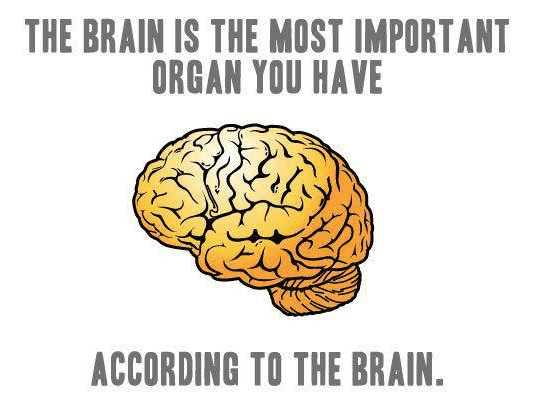
My Brain on Life


It’s been a while since I’ve written something unrelated to school, work or trying to figure out how to pay our homeowner’s association fees, so I figure I may as finally tell you all the story of how Animal Kingdom ruined me – or, depending on how you look at it, helped me get better.

On balance, I’m an incredibly fortunate guy. I have a decent job, a nice home, a loving fiancé, a caring family, and great friends. I have the ability to spend my off time getting my Master’s degree to advance my career into a field I have a genuine passion for. I’m getting married to the love of my life in less than eight months. I have my health, my nightly smorgasbord of pizza and beer in college be damned.

And yet, for the past few years, I’ve dealt with bouts of depression and anxiety. To a lesser extent, this dates as far back as high school, when I’d get bent out of shape for days, sometimes weeks at a time over petty drama, minor quibbles, and perceived slights and arguments. You might be familiar with this condition as first-degree “being in high school.”

But through college and my first few years as a young working professional (does identifying yourself as “Card Services” on the phone 100 times a day count as being a professional?), the issue never really went away for me, and over the last two-plus years, it’s gotten worse to the point of interfering with my day-to-day life.

Like any life, even the most blessed one, some really shitty things have happened in mine. But depression – or at least the form that manifests itself in me – is a funny thing. For me, it’s rarely the big, catastrophic event that knocks me into a funk, but the ticky-tack stuff.
One bad e-mail or quality check at work? Bam, two hours wondering what I’m going to do when I get fired.
A minor spat with a friend or family member? Four hours questioning whether I’m a good friend or if I’ll ever have the same relationship with them again.
An e-mail reminding me of a school deadline? An hour of contemplating dropping out.
Two minutes of bickering with my fiancé because the fifth Ikea dresser we’re trying to build didn’t go as smoothly as the first four? There’s a day of me pondering whether I’m a terrible partner and if I deserve her, or anyone.

It’s affected my work life, occupying my attention for hours at a time when I could be, you know, working. It’s affected my social life, as I drop fully out of conversations and engagements because I’ve decided at that moment to take stock of what I believe everyone thinks about me. It’s made me terrified of taking on big projects like my Master’s project because of the complete panic that has set in during previous semesters – the moment halfway through an assignment where I just think, “You know, what if I completely fail this? I could completely fail this. What’s going to happen then? What do I have then?” It’s frankly made it hard to get out of bed some mornings, or made me consider just blowing past my exit for work and just driving all day to nowhere in particular.

And yet, all at once, I’ll start feeling better, like my endocrine system has just run out of the “worrying” chemical it’s been pumping through me for the last two hours. A reprieve where I feel like my old generally happy, dick joke-making self again.

But anyway, this was supposed to be a story about Animal Kingdom.

A little over a year ago, my then-girlfriend, now-fiancé and I went to Disneyworld for a week. It was without a doubt the best vacation I’ve ever been on. Nevertheless, on the fourth day of the trip, I had a complete internal meltdown during our day at Animal Kingdom. I’m still not sure exactly what it was that set me off; Animal Kingdom’s my least favorite Disney park, but no specific event comes to mind. Maybe a monkey made a face at me or something.

Regardless of whether it was a long line, a bad sunburn, or a pebble in my shoe, all at once I had a change in emotional state about halfway through the day: I didn’t want to be there anymore. I didn’t know where I wanted to go or why, but I just needed out. I didn’t ask to leave right away because I didn’t want to ruin the day for Jenna, but I grew so sullen and quiet that it was hard for her to ignore. We eventually left. When we got back to our room, I finally told her how I’d been feeling.

“I think I’m bipolar,” I said, before laying out exactly how I’d been feeling for a while, especially for the better part of a year at that point.

Jenna listened, hugged me, kissed me, and said that I was probably not bipolar, but should go see someone when we got back home. She had my back. More importantly, she’d listened. I wasn’t alone. Someone else knew.

For the past year, I’ve seen a therapist every couple of weeks, and for the past three months, I’ve been taking a small, prescribed dose of citalopram every day – not enough to interfere with my usual recreational activities, mind you, but enough to keep the lows from getting too low when they do come about. The stress-reducing exercises have helped me immensely, but even just articulating my thoughts to an objective, empathetic and helpful therapist is worth it.

Therapy and medication aren’t “light switch” fixes. Even after months in therapy, there were still days I came home from a benign afternoon with friends burying myself in a pillow for no real reason. I don’t spend each day in a depressed, medicated fog, nor do I spend it strolling around like I’m Andy Samberg on a cocaine high in the “Great Day” Lonely Island sketch. But I feel more like me than I have in quite some time.

I’ve only told a couple people about this, in varying levels of detail, because I didn’t want to burden many people with my issues. I think that’s a big reason more people don’t talk about this sort of stuff, in addition to the persistent stigma about therapy and mental illness despite the fact that 18% of Americans experience some degree of anxiety, and 6% have had a "major depressive episode" in a given year. I don’t want to saddle you with my problems.

But as I’ve wrangled my emotions to an extent, I believe keeping all this to myself would be dishonest. It’s a huge part of my life, for better or worse, and to omit it like it’s a minute detail is to conceal something that has occupied an inordinate share of my time and thoughts. Additionally, as corny as it sounds, there is real value in knowing others are dealing with what you are. For the lion's share of the past few years, I wondered what was wrong with me: most of my problems seemed to be tied to normal, adult life (work, school, relationships), and nobody else seemed to be having the struggles handling it that I did. A big reason I felt as comfortable as I did seeking help is because I knew of friends and colleagues who visited a therapist and swore by it.

I can't emphasize this last part enough: as far as depression and anxiety go, there are a million different degrees, and I know there are others who go through much more than I do. If you’re going through a rough week, a rough month, a rough year, or what have you, I’d be happy to talk to you as a friend if you’re comfortable and willing to. We all deserve to have time for self-care, time to address us and us alone, because if you’re not at your best self for you, you can’t be your best self for anyone else.

Thanks for listening, guys. Trust the process.